Spray Foam Insulation and Mold-A Complete Guide

Spray Foam Insulation and Mold – A Complete Guide

Spray Foam Insulation and Mold –
A Complete Guide
 

Spray Foam Insulation and Mold-A Complete Guide

No one wants to have mold in their home. It can easily lead to serious health problems, like difficulty breathing. Thankfully, an insulation spray foam can help. It will be able to stop moisture from getting into the house.

However, before you start spraying, there are a few things that you need to know. This will ensure that you aren’t accidentally making the situation worse. Let’s look at some of the best ways to use spray foam insulation to take care of the mold problem in your home.


Signs of a Mold Problem

Let’s start by looking at some of the signs that you might have a mold problem. The most obvious symptom is the smell. It will often give the room a musty smell. This will be very difficult to get rid of without treating the underlying issue.

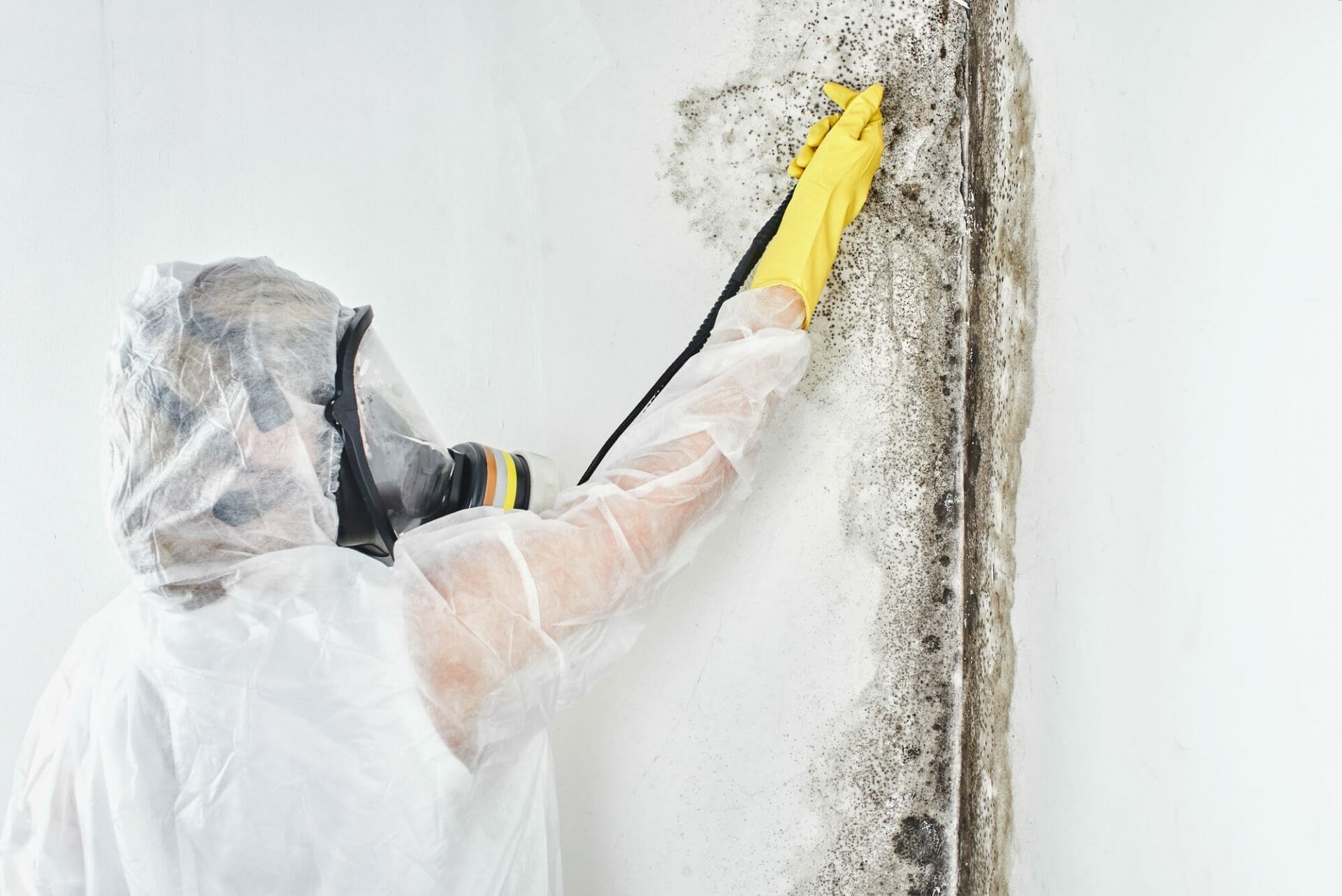
Another issue to look for is the spots. These will usually be either green or black. At the start, these can be very small and difficult to identify. But as the mold starts to spread it will be more visible. By this point, though, it signifies that the mold has a strong grip on the house. This will make it harder to remove.

Finally, it might start to manifest itself through health issues. It’s common for mold spores to cause breathing problems, particularly among those with asthma. Sometimes, it might also trigger issues for those who have allergies. You might even start to notice yourself feeling lightheaded.


Spotting Mold Behind Drywall

Sometimes, though the mold might be hidden away, behind the drywall. This can be even more challenging to spot. But, as long as you know what to look for, it won’t be impossible.

The first thing that you should be looking for is a sign of damp spots. Remember, mold will need a relatively moist environment to thrive. This can cause dark rings to appear on the wall.

It’s also a good idea to look at the condition of the paintwork. Sometimes, the presence of mold might be enough to make it begin to peel. This is the start of the deterioration process, as the fungus starts to eat through the wall.

Finally, you might find that the wall is starting to rot, as the fungus eats its way through the supporting beams. As a result, it can make the wall start to appear discolored.


Should You Spray Foam Insulation Over Mold?

There is nothing preventing you from spraying over the top of the mold. But this doesn’t always mean that you should. Let’s look at why it might not be a good idea.


Will Spraying Insulation Foam Kill Mold

Often, the only thing that you are thinking about is how the spray will affect the mold. It will kill it. This is because the thick foam will block out the airflow. Without air to sustain it, the mold will die.

However, spraying over mold is still a bad idea. It doesn’t deal with the underlying issues. Because of this, the mold could re-occur. Over time, this will lead to property damage, as the fungus eats through the walls. It is also a serious health problem, with the spores causing a lot of issues for those who have breathing difficulties.


Can You Spray Foam Insulation Over Black Mold?

Black mold is the most dangerous type of mold. It’s been linked with the most serious health issues. So, how does this affect mold and spray foam insulation? You will be able to spray the insulation over the mold. This cuts off the oxygen supply and kills the mold.

This is only a temporary solution, as the mold could return. However, it will be better than some other solutions. For example, painting over the mold won’t work. The fungus will be able to eat its way through the paint. Plus, it won’t be able to deter new mold from growing. Spay insulation does both.


How to Spray Over Mold

If you are determined to spray over the mold, there are a few things to bear in mind. First, the foam will expand. You don’t want to overfill the space. If you apply too much, you should be able to use a knife and cut off any excess.

It’s also important to try and get all of the mold. This will prevent it from spreading and becoming a bigger issue.


Removing Mold From Your Home

Before you start doing any work, you’ll need to focus on removing mold before insulation. Let’s look at some of the steps you’ll need to go through to do this.


Why Does Mold Occur?

The first thing that you need to consider is why the mold is forming in the first place. There are a few potential reasons why this might be happening. This can include:

  • High moisture. Mold spores will need to have a high humidity area before they can germinate. This is why they are most prevalent in wet areas, like the bathroom. The good news is that there is an easy way to test whether this is what is attracting the mold. You can use a hygrometer. Ideally, it should be between 30 to 50 percent.
  • Mold will need the right temperature range to thrive. It will struggle in hot environments. The ideal range is between 77 to 86 Fahrenheit (25 to 30 degrees Celsius).
  • Organic material. The mold will need to eat. This means that it will need to settle on some type of organic material. This can include things like wooden beams and wallpaper.

One of the things that make mold so dangerous is the spores it releases. This is how the fungus spreads. The spores will float through the air until they settle in a suitable area. Because of this, a relatively small mold patch can rapidly spread throughout the whole house.


Stopping the Mold Infection From Spreading

While a mold infection can spread quickly, it isn’t impossible to stop. There are a few actions that you need to do.

First, you’ll need to take action as soon as you spot the problem. The longer you wait to get started, the more spores it will be able to release. This will make it even harder to control.

To remove the mold, you’ll need to use a spray. You might be able to find one in the hardware store. Though you can also make one yourself. You will need to mix one cup of bleach with a gallon of water. You should then be able to spray this on the affected areas to start killing the mold. You’ll also need to scrub the affected areas with a coarse brush. This will dislodge the mold.

Sometimes, if they are soft surfaces, like carpet, you will need to remove them. The porous nature of these surfaces can provide the ideal environment for mold to flourish. Alternatively, you will need to spray, scrub, then vacuum up any spores.

Once you have cleaned the infected areas, you should use a HEPA vacuum. This has a fine particle filter, which will allow you to capture any spores that remain in the air. This will reduce the chances that the mold problem will re-occur.


When to Call a Professional

You might be able to deal with a minor mold problem yourself. But if it is too large, you will need to call in the professionals. They will be able to treat it with harsh chemicals. This will ensure that it stops spreading.

The best way to determine whether you need to call in a professional is by looking at the size of the mold. As a general rule, anything over 10 square feet will need professional attention. How long it will take them to remove the mold will depend on how far it had spread. In some cases, though, you will need to be prepared to wait a week for the mold to be removed.


Precautions When Removing Mold

When you are dealing with a hazardous substance, like mold, you will need to take a few precautions. First, you should wear a mask. You don’t want to accidentally breathe in the spores. They can make you sick. This is especially important if you suffer from respiratory problems. The spores in the air have been known to trigger asthma attacks.

You should also make sure that you are wearing gloves. You don’t want to be touching the mold with your bare hands. This can spread disease.

Finally, if you live with others you should warm them about the mold and give them notice of the day that you plan to remove it. Try to set a plastic sheet barrier. This stops the spores from spreading and causing problems.


Is it Possible For Mold to Grow on Spray Foam Insulation?

Once you’ve removed the mold, you’ll be able to safely apply the spray foam insulation. But will the mold be able to stage a comeback? Can it grow on your spray foam insulation?

Spray foam insulation won’t be a good source of food for mold. Because of this, you won’t see mold on spray foam insulation.

As we mentioned, you will be able to spray this over the mold. As it expands, the insulation will cut off the oxygen supply. Because of this, insulating over mold will kill it almost instantly.

For this reason, this type of insulation has become very popular for use within the home. It’s commonly used in areas that are known for having high humidity, like the attic or basement. Normally, these zones are at a higher risk of mold. Using spray foam insulation limits how much the mold will be able to spread.


When to Avoid Spraying Foam Insulation

In most cases, spraying insulating foam is a good solution. It’s easy and fast to apply. Plus, it doesn’t degrade for many years. It’s estimated that a professionally applied foam will last for around 50 years. But that doesn’t mean that it will always be the best option. Let’s look at some of the circumstances when you should avoid applying foam insulation.

As we mentioned, you should avoid insulating over mold. This is a temporary fix to the problem. Without addressing the factors that led to the mold occurring, it will keep coming back.

Another common insulation is putting spray foam around electrical components, like ceiling lights. If the foam gets into these areas, there is a risk that it can jam them up. This will stop it from working, causing you potentially thousands of dollars in damages.

It’s also a good idea to avoid using it around the doors. As the foam expands, it might be enough to knock the door out of alignment. This can sometimes mean that the door won’t be able to open properly.

If you have any of these problem areas it might be a good idea to talk to a professional. They might be able to help you in these more sensitive areas.


How Spray Foam Can Reduce the Risk of Mold in Your Home

Using spray foam in your house is ideal, particularly in areas where you have a mold problem. There are a few ways that it can help.

First, it will be able to stop moisture from entering the room. In this area, spray foam tends to be more effective than other types of insulation. This is because it will expand. This allows it to fill the space, creating an airtight seal.

This will make it a lot harder for the mold spores to germinate. If you are still concerned about the risks, you can take some other measures to lower the humidity. We’ll take some of these preventive steps a little later.

It can also be a good way of blocking drafts and sealing passages to the outside world. This isn’t just about making it easier to heat and cool the room. It is also a good way of stopping the mold spores from getting into your house in the first place. It also makes it harder for them to spread once they are in the house.


Preventing Mold in Your Home

While there are ways of removing mold, this will be a lot of work. It’s best if you can prevent it from occurring in the first place. There are a few tips that you can use to do this.


Using Spray Foam Insulation to Reduce Humidity

First, it’s critically important to make sure that you are lowering the humidity of the room. High moisture is needed for the mold spores to spread. There are a few ways that you can control the humidity.

First, you might want to use a dehumidifier. This will suck the excess moisture from the air. It’s best to choose one that has an inbuilt hygrometer. Because of this, the air won’t become dried out.

It might also be a good idea to use some insulation. This will stop moist air from penetrating through the walls. Spray insulation can help you do this, forming an impenetrable barrier.

A third tip is to make sure that you get any leaks. The longer the leak is continuing, the more time for the moisture to build up in the air.

Finally, you should focus on getting your house dry if you have been flooded. The risk of mold will be greatly reduced if you can do this within 24 to 48 hours.


Take Proactive Measures

There are some parts of your house where mold is more likely to grow. These are the wet areas, like the bathroom. When you are cleaning these spaces, you should take some extra precautions. Use a bleach mixture to wipe down surfaces. This will neutralize any spores before they can get a chance to germinate.


Improve Air Flow

A simple way to get rid of mold is by improving the airflow around your home. This can mean opening a few windows, so the moisture doesn’t build up. You can also install exhaust fans in the bathroom, kitchen, attic, or basement. This is a good way to control humidity in these problem areas.


Get an Air Purifier

Some air purifiers will be able to catch the spores, removing them from the air before they have a chance to germinate. This is a great way of controlling the way the mold will spread through the house. However, you will need to make sure that you are using a HEPA air filter. This is the only one that will be powerful enough to filter out the small mold particles.


Use Mold Preventing Products

Finally, you might want to consider using a product that prevents mold. Some cleaning products let you do this. You can also add some mold inhibitors to the paint. This will stop mold from growing inside the house.


Final Thoughts

Having mold in your house is a big problem. The last thing you want is for the spores to make you sick. The good news is that there are some ways that you can solve this issue. You can use bleach solutions to remove the mold. You can also try insulation over mold, with the foam making it impossible for the fungus to access oxygen.


How to Keep a Room Above the Garage Warm

How to Keep a Room Above the Garage Warm

How to Keep a Room Above the Garage Warm

Having a room above your garage can be a great space. You can use it as an extension to the workshop, or a place to hang out with your friends. There is only one drawback. If it’s not insulated properly, it can get very cold.

Thankfully, this is a problem that is relatively easy to solve. Let’s take a closer look at why this room is so cold and what can be done to warm it up.


Are Rooms Above the Garage Cold

One of the most common issues that you might experience is that the room above the garage never has a pleasant temperature. Sometimes, it will be too cold. At other, times, though, it can be too hot.  To understand why this is happening, we need to know about the basics of airflow.

Air will flow freely where there are no barriers. When the colder weather starts to move in, the cold air won’t encounter any obstacles, flowing easily into the room above your garage. This is why warming these rooms can be so difficult.

The warm air will naturally want to flow back outside, to restore the temperature differential. Without any barrier to stop the air, it will be cooling at the same rate as you are pumping in hot air. This is why it can seem like the room is impossible to heat.

Often, these issues will stem from a lack of insulation. It’s common for builders to view these spaces as an afterthought. Because of this, they won’t put the same attention into these areas as they do other parts of the main house. This means that it won’t have the same level of insulation as the rest of the house.


Checking for Insulation

There is an easy way to determine if a lack of insulation is the cause of the problem. You just need to remove the electrical box. Before you do this, make sure that you have turned off the power. Then, you just need to carefully pry the box from the wall.

As you are doing this, you should be able to see if there are any batons or loose-fill insulation. Once you have finished, you should be able to pop the box back into place.

Another option that you can explore is drilling a small hole in the wall. You want to do this at the base of the wall, just above the baseplate. Make sure you do this in a place that doesn’t have any studs. Ideally, the drill should come out with pieces of insulation on it. If not, you can stick an inspection scope into the hole. This will give you a clear view of what is inside the wall.

It’s also important to look at the areas where the two types of materials meet. These joins can be an area that air can flow through. This could be what is causing your problems.  You might see cracks in the joints, which the air can get through.

It should be noted that sometimes the insulation can degrade over time. This might be the reason why older homes start to develop a draft. It will degrade faster if it is left uncovered.


Other Reasons Why the Room Might be Cold

While lack of insulation is the most common problem, particularly in the garage, there are a few other issues that to consider. Let’s briefly look at what these are and how you can fix them.


Heating Vents

If you have central heating, the warm will air will come through the vents. Sometimes, though, you might be blocking them with furniture. Or they can get clogged with dust. This stops the heat from coming into the room.

If the exterior looks okay, place your hand over the grill. If you can’t feel the warm air, it might indicate an internal problem.  A common issue is rodents in the vents. Take off the vent and take some pictures with a smartphone to see if you can spot the problem. If you can’t identify the blockage, you might need to call in a professional.


Leaks in the Ducts

Sometimes, the issue might stem from a leaky duct, which disrupts the flow of air around the home. If you can find this leak, you might be able to fix it yourself. You can apply a gap sealing spray to the cracked area. This should plug the leak. Though, if it gets worse, you might need to consider replacing that section of ducting.


Faulty Thermostat

The thermostat is responsible for telling you the central heating system how hot or cold the room is. If it is inaccurate, it can be a major problem. The easiest way to test this is to purchase a thermostat from the hardware store and put it next to the one in the room. Wait for half an hour and compare the readings. If it is more than a degree off, it can indicate an issue.


How to Insulate a Garage

If a lack of insulation is the problem, don’t despair. There are some easy ways to get a well-insulated garage. Let’s take a closer look at some of the methods that you might want to use.


Insulating Attic Above Unheated Garage

If there is a lack of insulation in the room, there are some simple ways that you can solve this problem. You can get insulation batts or loose-fill. But this can be cumbersome.

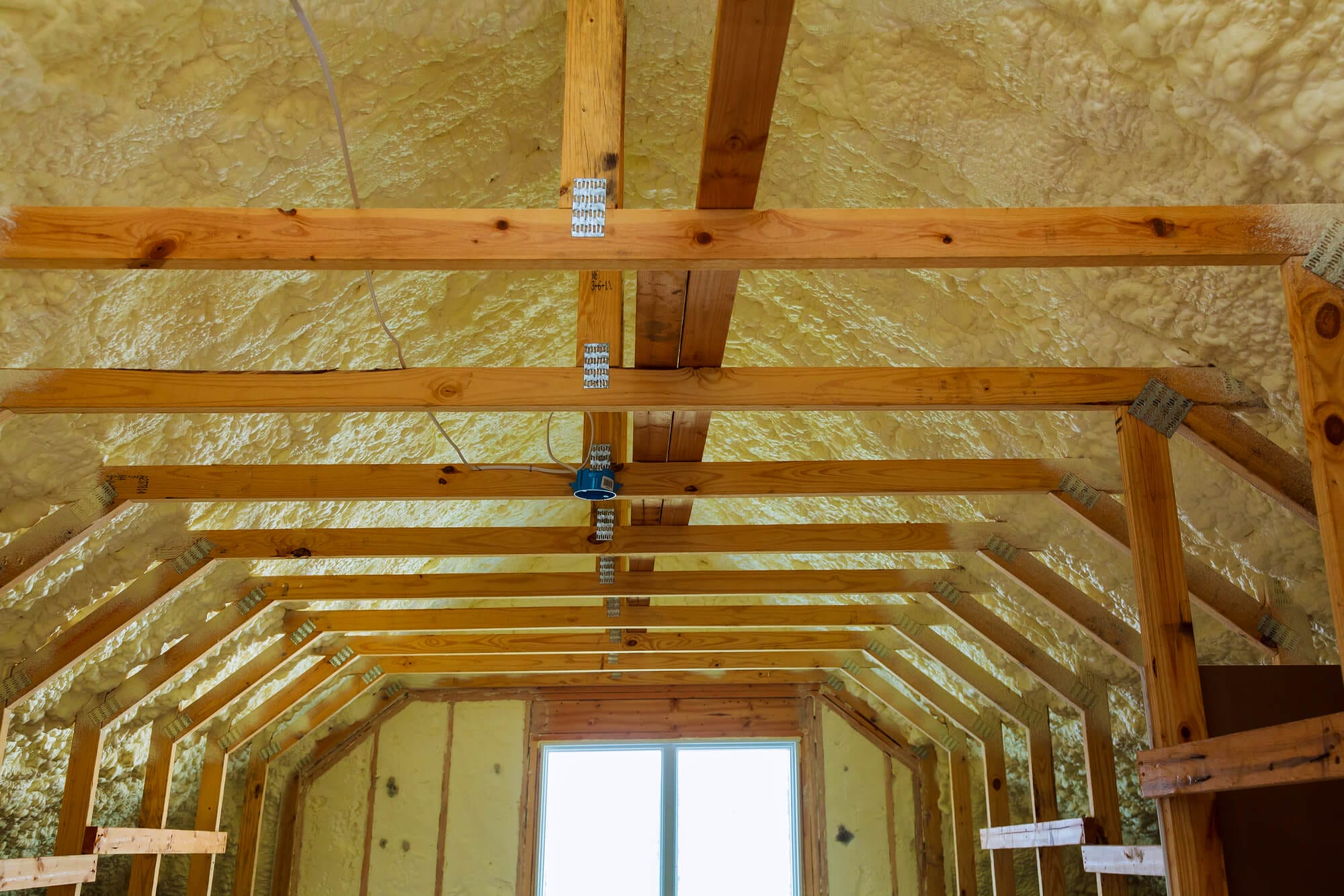
Usually, the best option is to use garage spray foam insulation. This will be easy to apply. You should be able to finish foam insulating your garage within the day. It will last for a long time. It’s estimated that this type of insulating won’t need to be replaced for 50 years.


Preparing the Area

The first thing that you need to do is make sure that you have prepared the area properly. This can be quite a messy process. You can put down some newspaper to protect your furniture. It’s also a good idea to wear some old clothes.

Sometimes, you might need to prepare the place where you want to put the insulation. You’ll need to make sure that they are clean. If there are uneven surfaces, you might need to sand them down a bit. This will ensure that the spray will bind smoothly to the surface.

You might also want to spray some water over the area. This will ensure that the foam will curl properly.

Finally, if this is your first time using the spray, it can be a bit tricky. Because of this, you might want to try practicing on a piece of paper before you do it on the real thing. This will get you used to the flow of the insulation, allowing you to apply it evenly.


Applying the Foam

Once the area has been prepared, it’s time to start applying the foam. Before you do this, read through the instructions. When you are ready to start, you want to move as smoothly as possible.

Then, you just need to wait for the insulation to expand. How long this takes can vary depending on the type of spray that you are using. The basic expansion will start within a few minutes. But you will often need to give it at least a day before it is fully hardened.

Applying the foam is fairly simple. But there is a common mistake. Putting too much insulation spray into the crack. When it expands, it can make the area look unprofessional. Thankfully, there is an easy way to solve this problem. You just need to take a knife and remove any excess.


Calling in a Professional

While you might be able to apply a small area by yourself. But if you need to do the entire room it’s best to call in a professional. They will be able to use specialized tools and equipment. This gives you the peace of mind of knowing that the job has been done properly. Plus, getting it wrong might risk damaging your home and will fail to stop the drafts. This can be an expensive mistake. Professionals also know how to deal with mold that may have infiltrated the room’s walls.


Insulating Garage Door

If you reduce the amount of air that is coming into the garage, it will be a lot easier to keep the room above the garage warm. But insulating around a door can be a slightly more difficult job. You can’t close the cracks using expandable foam. If you did this, you wouldn’t be able to open the door again. Thankfully, there is another option that you can explore. You might want to get a vinyl weatherstrip. This will block out unwanted drafts.

To make sure that you are getting the right size, you’ll need to measure the weatherstrip. Then, you simply need to attach the strips to the door. Most will just screw into place. This video will walk you through the process.

Another option is applying foam spray insulation around the door frame. You can check if this is needed by seeing if there are any cracks, which could be letting in the air. On a sunny day, close the door. If you can see light coming in, it’s a sign that the door needs to be insulated.


How to Insulate a Garage Ceiling With a Room Above it

You don’t just need to think about how you are insulating the room. You also need to make sure that there is adequate insulation on the roof of the garage.

You can follow the same principles we described above, applying the layer of expanding foam to the ceiling. But there is another option that you can explore. You can call in a professional company. There are a few reasons why it might beneficial in this case.

First, the roof is harder to reach. Standing on a ladder to reach can be a problem, you don’t want to lose your balance and fall off. Plus, there might be electrical wiring and plumbing installed on the roof. You’ll need to be careful around these technical elements. You don’t want to accidentally damage them.

The good news is that a professional spray foam installation for a garage doesn’t need to cost an arm and a leg. You can choose an affordable, professional service. Before you begin, get them to give you a quote, so you have a better idea of how much you will be expected to pay. You can then compare this figure to other local builders to make sure that you are getting a good deal.


The Benefits of Insulating a Garage

As we mentioned, a well-insulated garage will be a lot easier to keep warm. But this isn’t the only benefit that you will be able to unlock. Here are some of the other benefits to consider.


Lower Electricity Cost

If you are searching for an easy way to save money, insulation is the best option. As there is less airflow, you won’t need to spend as much money trying to heat the space.


Stops Sound Traveling

For many people, the garage is a place to use power tools and other loud equipment. When you have used foam insulation, it will help to contain the sound. This ensures that you won’t end up annoying everyone else in the house.


Lower Carbon Footprint

Since you are using less electricity, you will be producing less carbon. This is better for the environment.


Boosts the Value of Your Home

If you don’t like the room above the garage always being too cold or too hot neither will a potential buyer. Though it can often go overlooked, a well-insulated garage can be a selling point. The buyer won’t need to put in any work to make it a workable space. Because of this, they will be able to take the money that they would have made and add it to the purchase price, putting more cash in your pocket.


Better for Your Health

Finally, a well-insulated garage will be a good way of improving your health. If you are spending too much time in a cold environment, it can start to compromise your immune system. There is a greater risk that you will get certain diseases, like catching a cold. You shouldn’t have to rug up to work in your garage.


Other Ways to Make the Room Above a Garage Warmer

While garage foam insulation is a good option, it isn’t the only way that you can warm up the space. There are a few other options that you can explore.


Adding a Heater

This is often the first thing that a lot of people try. There are plenty of heaters that you can use, depending on the type of garage you have. For example, if you have a larger space, it might be best to use a gas heater. This will put out a lot of warmth, but you will need to be careful about using it in an enclosed space.

Another option is to use an electric heater. You can use a radiant bar heater that is attached to the wall, radiating heat down into the room. Or you can use a fan heater which sits in the corner.

However, as we mentioned, adding a heater won’t be effective unless you have insulated the room first. If you haven’t done this properly, there is a risk that the heat will seep out of the cracks in the walls. You’ll be left cold with a significantly higher electricity bill.


Using a Draft Stopper

Even though you have insulated the room, you might still feel a draft coming from under the door. Thankfully, there is an easy way to prevent this. You can use a draft stopper. All you need to do is lay this under the door, it will block the wind, making it easier to warm the room.


Get More Thickly Glazed Windows

Sometimes, the glazing on the windows can be a problem. If it isn’t thick enough, the warm air could be leaking out through the glass. While this won’t be as dramatic as a lack of insulation, it can still make it harder to keep the room warm. There is an easy way to solve this problem. You can get double-glazed windows. This is a good solution if you plan to spend an extended period in the room.


Get a Thick Blanket

Hopefully, by now, the room is at a more comfortable temperature. But in a harsh winter, you might still need to have a thick blanket if you plan on staying in the room for an extended period. Besides, there is nothing better than rugging up under a warm blanket during the winter months.


Final Thoughts

The room above a garage can be very draughty. This can make it very hard to keep warm during the winter, as cold air is always flowing in. Thankfully, there are some ways to stop this problem. The best choice is usually to have more insulation. This will stop the hot air from escaping. Hopefully, these tips will ensure that you don’t need to rug up before making a trip to the garage.


Contact us

Contact us to help you get the best service for your home or business

63 Alness St #7b, North York, ON M3J 2H2

Mon-Fri: 9 AM – 7 PM